
First Mover in AI-Powered 100% Employee Productivity Tracking
We are proud to be among the first companies in Australia to develop and implement comprehensive AI-powered employee productivity tracking, with 10+ deployments across sales, BPO, and worker-level operations.
- 33% Reduction in Idle Time
- 23% Increase in Employee Output
- 15% Improvement in Retention
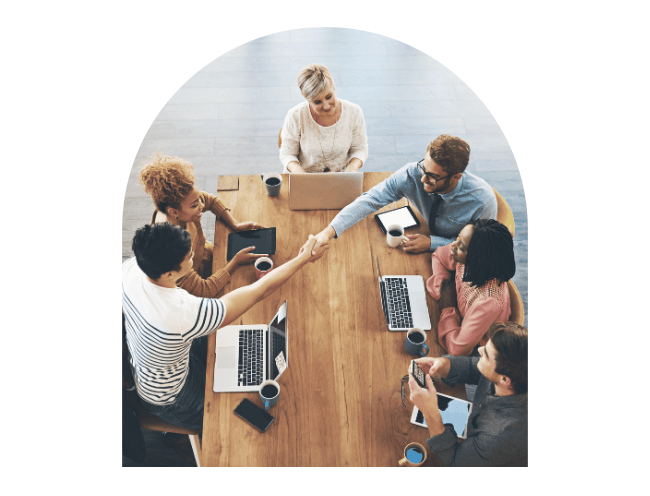
AI-Powered Employee Productivity Monitoring
Let’s take the example of a software company with over 500 employees working remotely. The management wants to ensure high motivation through productivity, while avoiding burnout, tedious tasks, and inefficiencies in tracking project progress.
To address this, they implement an AI-powered Employee Productivity Tracking System. The system continuously studies and analyzes employee work behavior and sends detailed reports to the management. It tracks how much time an employee spends on different applications and categorizes the data into productive hours and idle time.
It also detects unproductive behaviors such as extended breaks, long idle periods, and irregular logins—and automatically sends alerts and reports to the respective manager and HR department. In addition, the system analyzes patterns to identify when teams are most productive, and offers predictive insights—such as recommending which employee is best suited for a particular project.
iProgrammer’s AI-powered Employee Productivity Tracking System monitors, analyzes, and optimizes how employees work using behavioral patterns, predictive analytics, ERP integration, and AI models.
This is the most fundamental component of the Employee Productivity Tracking System. It monitors user interaction across laptops, desktops, mobile phones, or tablets.
- Which applications are used
- Which websites are accessed
- Keyboard usage
- Mouse movement
- Screen inactivity
This data is analyzed using NLP and categorized as: Productive (relevant apps), Neutral (industry content), and Lean (social media).
Analyzing behavioral trends and patterns over time to better understand work rhythms.
- Peak productivity hours
- Average idle time
- Burnout detection
- Context-switching periods
Managers receive regular updates about extended breaks or early signs of burnout, enabling timely intervention.
An outcome-based AI model that connects tasks to actual performance.
- Time spent on each task
- Which employees contributed, and at what efficiency
- Estimated project completion time
This data enhances resource planning, reduces unnecessary meetings, and highlights both high performers and those needing support.
KPI-driven dashboards designed for department heads and leadership to forecast trends and identify anomalies.
- Custom AI-generated reports
- Trend graphs
- Productivity heatmaps
- Automated email summaries
Data transparency builds trust, strengthens accountability, and fosters a culture of continuous improvement—without blame.
Seamless integration with all in-house systems.
- Plug into existing ecosystems
- Automated pop-ups and alerts
- Workflow triggers
Integration removes the need for manual monitoring and enables real-time action based on live data.
Use Cases for
AI-Powered Employee Productivity Tracking
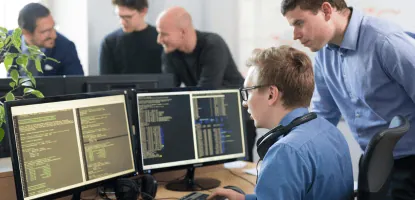
In a software development company, where the workforce is distributed across different geographical locations, it becomes nearly impossible for managers to optimize workload and measure productivity accurately. Even in remote jobs, it is necessary to track collaborative tasks, meetings, idle time, and actual working hours. AI models can monitor application usage, code repositories, communication tools, bug fixes, and calculate peak working hours and signs of burnout.

With large teams handling voice and chat support, it’s essential to have a clear view of customer satisfaction, grievance redressal, and ticket resolution metrics. This AI model identifies time spent on call handling, ticket resolution, breaks, technical issues, call transfer durations, and extended gaps between calls.

Traditional tracking tools fail to capture the creative efforts of employees. With AI, you can monitor time spent on platforms like Adobe Creative Suite, Figma, Canva, Trello, and Google Workspace. More importantly, AI detects stress indicators and usage spikes that may point to burnout among designers, writers, and strategists.
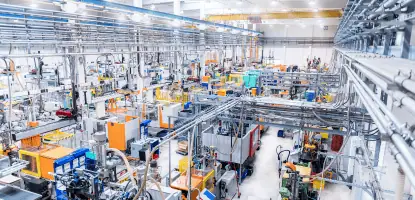
Managing productivity on floors and assembly lines is complex. Our model integrates with shop floor machinery, sensors, and attendance systems to reduce downtime and human error. AI also detects anomalies—such as longer-than-usual machine stoppages—and correlates them with human behavior patterns.
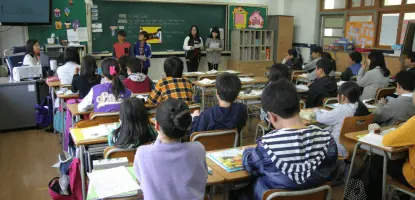
As many educational institutions move to online models, it becomes increasingly difficult to track student engagement and instructor productivity. AI monitors student interactions with the LMS, participation in classes, and evaluates instructors based on engagement levels and student performance in assessments.

AI tracks productivity across patients, doctors, nurses, and support staff by identifying bottlenecks in patient care, staff fatigue, shift rotations, medicine availability, and patient overload. Administrative teams benefit from AI-generated dashboards that show appointment scheduling efficiency, claim processing timelines, and task completion rates.
AI-Powered
Employee Productivity Tracking Types
Those were the days of simple time logs and screen shots. Modern workplaces now require real-time, intelligent, and context-aware productivity tracking — and this is precisely what AI provides. Following are the essential types of AI-powered productivity tracking systems that are reshaping workforce performance measurement, management, and optimization.
AI doesn't only monitor time — it knows how it's being utilized. This solution can automatically identify which programs and websites employees are accessing, how long they're engaged, and what kind of work they're doing (e.g., communication, coding, designing, browsing). It classifies work into productive, neutral, and unproductive, enabling managers to make fact-based decisions without micromanaging.
Software companies, digital marketing teams, and remote-first businesses
Detection of excessive messaging app usage during peak hours
More than metrics — it reads the rhythm of work. AI examines behavioral patterns like keyboard/mouse activity, frequency of app switching, attention span, and breaks. It understands each employee's personal work style over time and recognizes burnout, overwork, or disengagement signals. This enables HR and team managers to intervene early and enhance well-being.
For BPOs, creative shops, enterprise operations
Identifying an agent's waning attention after working a long shift to recommend breaks or task switching
Shift from reactive reporting to predictive performance. AI can produce real-time productivity ratings for employees, teams, or departments from KPIs, work accomplishments, and level of engagement. These ratings aren't mere figures — they're tied to project progress reality and employee performance patterns, making accurate forecasting and resource allocation possible.
Foretelling which developer is likely to fall short of a sprint target based on performance history for the previous three weeks
Have AI monitor projects so your team can concentrate on making progress. This category integrates with project management solutions such as JIRA, Trello, Asana, or ClickUp to track task status, turnaround time, and cross-functional dependencies. It flags bottlenecks, time overruns, and resource misalignment — all without disrupting workflows.
Product development teams, service delivery units, and remote project teams
Notifying a manager if a task during the QA stage is delayed past the SLA limit
AI reminds you to look beyond the screen. Geofencing, biometric records, and mobile app data can be used by AI to monitor location-based productivity among on-site workers, field agents, and hybrid workers. It verifies individuals are where they need to be when they need to be there — and working on the right things.
Alerting a manager if a field agent departs a client location early or misses a scheduled call
Non-invasive visual productivity. Through AI-powered CCTV or camera streams, the system can track worker presence, movement, congestion, PPE adherence, or area-of-restriction infringements — all in a privacy-sensitive manner. It's applied to productivity as well as safety and compliance within industrial and commercial environments.
Detecting low usage in a designated lab area and redistributing resources accordingly
Why Choose iProgrammer for
AI-Powered Productivity Monitoring?
At iProgrammer Solutions, we don’t just build AI systems — we build intelligent ecosystems that help businesses thrive. Our AI-powered productivity monitoring solutions go beyond basic metrics to deliver real-time, meaningful insights that drive performance, enhance well-being, and help teams work better, faster, and smarter.
We've spent years developing intelligent, real-world AI systems — from surveillance to automation. Our productivity monitoring solutions are the result of deep R&D, tested across industries like tech, BPO, healthcare, and education.
- Proven algorithms
- Enterprise-grade scalability
- Designed for high performance and real impact
No two companies are alike — and neither should their monitoring systems be. We customize our AI engines based on your tools, goals, and team dynamics. Whether it’s software development, customer support, or field operations — our AI adapts, not forces.
- Integrates with tools like JIRA, Zoom, Trello, CRMs
- Supports hybrid, remote, and on-site environments
- Smart enough to learn your team’s rhythm
Forget static reports and generic dashboards. We deliver intelligent insights that highlight trends, detect inefficiencies, and suggest improvements — automatically.
- Identify burnout before it happens
- Optimize workload balance and collaboration
- Boost team performance without micromanagement
We believe in supportive tracking — not surveillance. Our systems are designed to respect individual privacy while giving leaders the transparency they need to lead effectively.
- Role-based access
- Anonymized data options
- GDPR- and compliance-ready
Get started in days — not months. iProgrammer’s systems integrate effortlessly with your existing tools, cameras, attendance systems, and workflow platforms — minimizing disruption while maximizing insight.
- API and plugin support
- Cloud and on-premise deployment
- Real-time alerts, mobile dashboards, automated reports
With iProgrammer, you’re not just buying software — you’re gaining a strategic technology partner. We offer ongoing consultation, model tuning, feature updates, and support that evolves with your business.
- Dedicated support team
- AI roadmap planning
- Quarterly performance optimization
In today’s hybrid and remote environments, employees don’t need intense supervision — they need smart support. Our AI systems empower teams by delivering meaningful, real-time insights that help individuals better understand their own productivity rhythms.
- Reveals true work patterns across all apps
- Highlights peak productive hours for smarter task scheduling
- Promotes focused work by identifying distractions
- Detects early signs of burnout
- Enables efficient work distribution
- Encourages a collaborative approach
- Supports continuous improvement
We build our platforms in compliance with global standards like GDPR and HIPAA, as individual performance and browsing data must be handled with the utmost security. All data is encrypted using AES-256, ensuring it remains secure and inaccessible to unauthorized parties.
Yours Achieve Success
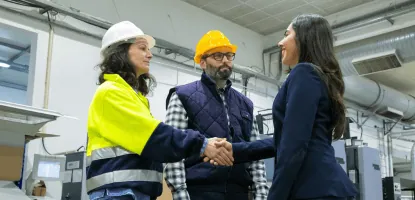
The site manager accesses real-time data on his tablet and observes a 31% increase in productivity across site and sales teams.
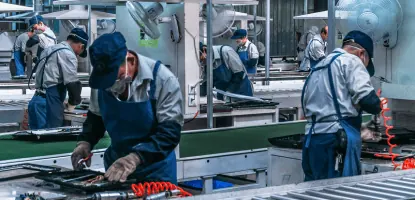
The floor manager tracks technicians’ productivity and response time, resulting in significantly reduced downtime.

A hospital administrator improved workforce efficiency by 17% by detecting shift fatigue and reallocating resources using AI.
Our AI-powered systems have already delivered measurable outcomes:
marketing agencies
attendance accuracy
using face recognition
We transform the way you work.
