
AI-Powered Systems
Built for Boosting Productivity
Cut delays, reduce rework, and bring clarity across teams, lines, and shifts—without disrupting operations.
- 33% Lower Idle Time Across Teams
- 98.7% Accuracy in Product Counting and Classification
- 4x Faster Process Audits and Compliance Reporting
- 70% Reduction in Manual Quality Control Efforts
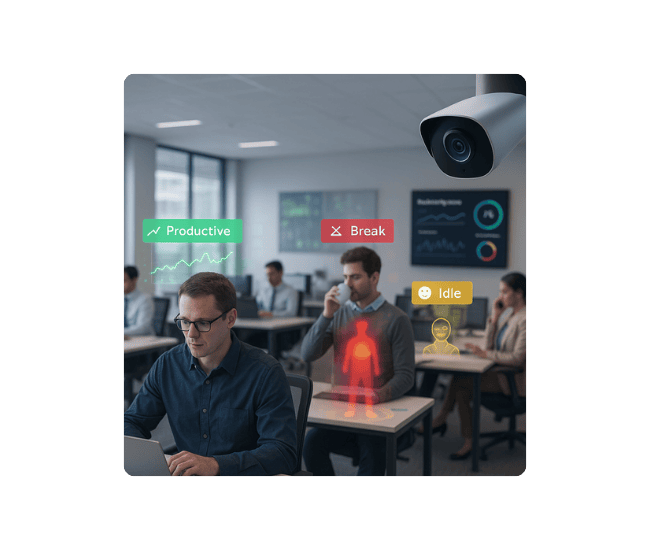
Why Productivity Needs a Smarter Approach
In today’s operations, productivity isn’t just about output—it’s about how accurately products are counted, how consistently teams follow process, and how early you catch issues before they escalate. Yet most organizations still track these in silos, if at all—and that fragmentation comes at a cost.
Across industries, nearly 5% of manufacturing costs are lost to avoidable rework. One in five product returns can be traced to packaging or grouping errors. Around 60% of quality issues happen not because of machine failure, but due to missed process steps. And burnout-related inefficiencies are quietly driving up to 15% attrition in labour-heavy environments.
At iProgrammer, we bring these gaps into focus. Our AI Productivity Solutions unify process tracking, defect detection, product counting, and team performance monitoring into one integrated, intelligent layer. These systems don’t just report—they learn, act, and adapt in real time. The result: stronger compliance, fewer errors, and a measurable lift in both speed and quality—without pushing teams to their limits.
What iProgrammer’s
AI Productivity Suite Covers
From people and processes to packaging and product quality—our AI systems are built to track, learn, and improve what traditional tools often miss.
Accurate counts. Smarter packaging. Fewer customer escalations.
Clarity on how teams work—without micromanagement.
Catch the flaws before they become failures.
Move from reactive checks to real-time process assurance.
How Productivity is Measured
What sets AI-based productivity apart isn’t just the data—it’s what the system does with it. Traditional metrics (time, output, cost) remain important, but AI introduces three critical shifts:
Rather than recording that a delay occurred, AI understands why it happened—by analysing system logs, human behaviour, visual evidence, and environmental data in parallel.
Instead of just reporting missed deadlines or rework percentages, AI helps forecast who’s about to burn out, which product batch might fail inspection, or where a line is likely to break process adherence.
The same system delivers tailored insights for different stakeholders: a supervisor sees task bottlenecks; a line manager sees grouping errors; a quality lead sees traceability gaps.
Implementation Approach
We start by understanding your lines, teams, systems, and performance priorities. We assess what data is available and where the biggest productivity gaps lie.
Every AI model is trained on your actual workflows—be it product images, user behaviour, audit history, or process videos. The system learns what “normal” looks like in your context.
We integrate with your existing infrastructure—MES, WMS, ERP, SCADA, or line cameras—avoiding major hardware or software overhauls.
Once validated in test environments, the system is deployed in phases—starting with high-impact units, then scaling across shifts or sites.
Post-deployment, the system improves automatically. And our team remains actively involved—reviewing performance, updating logic, and tuning outputs for long-term value.
We Empower
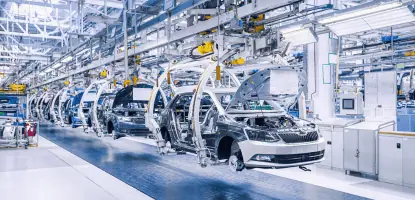
Where precision drives performance—and delays cost more than time.
- Tracks process adherence across lines, shifts, and SKUs
- Detects product-level defects, miscounts, or packaging errors
- Reduces manual inspection, counting, and rework cycles
- Integrates with MES and PLCs for live-floor visibility
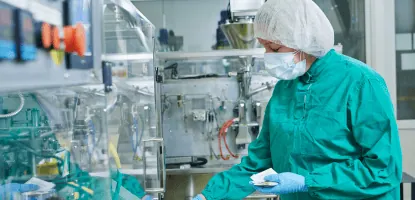
High-stakes environments where compliance isn’t optional.
- Validates SOP execution, hygiene steps, and packaging flows
- Visually counts pills, vials, and strips with audit-ready evidence
- Detects labelling mismatches, batch anomalies, and underfills
- Enables GxP-aligned digital trails for traceability and recalls
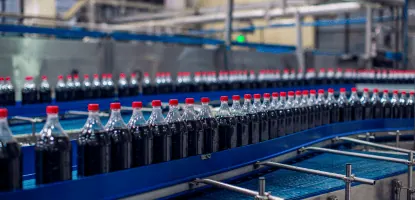
Fast-moving lines need real-time clarity—without adding overhead.
- Counts and groups baked goods, confectionery, or snack packs
- Flags missing units, size variations, or seal defects pre-dispatch
- Detects hygiene lapses in cleaning cycles or prep zones
- Adapts to transparent, irregular, or overlapping items
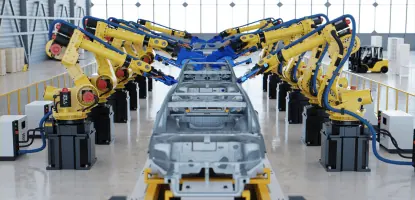
Built for complex assemblies where missing parts or missteps derail quality.
- Verifies fastener kits, gasket sets, or mixed-batch SKUs
- Tracks torque tool compliance, SOP checklists, and rework cycles
- Detects structural surface flaws (cracks, scratches, corrosion)
- Logs process data and visual records by VIN or batch
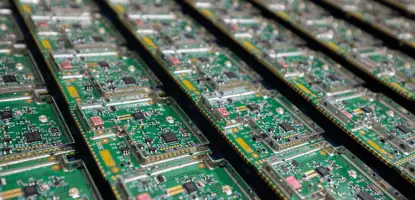
Where small errors have large consequences.
- Identifies soldering defects, missing components, and misalignments
- Validates correct sequence and positioning in PCB assembly
- Tracks micro-level surface defects using thermal or microscopic vision
- Tracks micro-level surface defects using thermal or microscopic vision
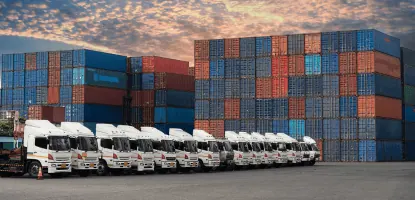
Because grouping and dispatch accuracy impacts brand trust.
- Confirms package content against order logic and pick lists
- Groups mixed-SKU items into accurate shipment bundles
- Detects count mismatches, mislabelling, or scan errors
- Integrates with WMS and ERP for real-time warehouse sync

In distributed teams, productivity visibility means faster decisions.
- Tracks application usage and task progress on mobile teams
- Detects idle time patterns, overutilization, or burnout risks
- Correlates on-site performance with shift, weather, and work type
- Helps optimize crew deployment across active job sites

Where productivity insights help teams focus on what truly drives outcomes.
- Tracks app usage, meeting patterns, and focus time across teams
- Detects multitasking fatigue, screen overload, or disengagement trends
- Correlates output with work hours, team structure, and task types
- Enables data-backed strategies for workload balancing and well-being

Operational efficiency that supports better patient outcomes.
- Tracks staff allocation, rotation, and shift efficiency
- Detects SOP deviations in sterilization, medicine handling, or care routines
- Monitors claim processing, patient wait times, and task closures
- Increases traceability and reduces admin workload through automation
iProgrammer
At iProgrammer, every solution is purpose-trained, context-aware, and built around how your operations actually run.
Every deployment starts with how your teams work—not how software thinks they should. From process audits to team productivity, our systems adapt to your rules, not the other way around.
We focus on clarity—what’s working, what’s not, and what to do next. No abstract scores or buried alerts—just actionable, role-based insights where they matter most.
Our team brings together AI engineers, manufacturing specialists, and human-centered designers—ensuring the systems are both technically strong and practically usable on the floor.
With teams in India and Australia, we deliver localized deployment, rapid iteration, and responsive support—rooted in your market’s regulatory and operational context.
Whether deployed on-premise or in secure cloud environments, your data remains yours. Every solution includes full audit trails, role-based access, and compliance with GDPR, HIPAA, and Australian data protection standards.
AI Tools
That Drive Real Productivity
- Vision-Based Product Counters: Count fast-moving, overlapping items (snacks, strips, pouches) with SKU-specific object detection models.
- Defect Detection Models: Identify surface flaws (cracks, dents, stains), missing parts, or alignment issues using visual, thermal, or microscopic feeds.
- SOP Compliance Agents: Monitor real-time task execution against SOPs using video, sensors, and logic-based validation—ensuring sequence, tool use, and hygiene.
- Employee Productivity Engines: Track screen/app activity, focus trends, idle bursts, and session flow to uncover fatigue, overuse, or training needs.
- Process Mining Tools: Extract step-wise logs from ERP, MES, or PLC systems to reconstruct workflows, flag process deviations, and highlight rework triggers.
- Edge Inference Systems: Deploy optimized AI models (via Jetson, Edge TPU, ONNX, etc.) directly on-site for real-time, low-latency insights without cloud dependency.
from the Field
A global snack foods manufacturer faced frequent issues with misgrouped combo packs. With fast-moving belts and irregularly shaped items, manual checks were error-prone, leading to returns and rework.
We deployed a real-time AI vision system on the final packaging line. The model visually identified and counted individual items—even when overlapping—and validated grouping logic before sealing.
- 98.7% counting accuracy across SKUs
- 80% fewer manual sorting escalations
- 26% increase in packaging line throughput
A distributed customer support firm was struggling with low visibility into employee workload and rising attrition. Manual timesheets and tool logs couldn’t identify idle patterns or burnout risks across shifts.
We implemented AI-based productivity tracking across CRMs, chat platforms, and support tools. The system analysed behaviour patterns, flagged disengagement trends, and surfaced insights on individual productivity rhythms.
- 33% reduction in idle time across teams
- 70% faster review cycles for team leads
- 15% improvement in employee retention
A precision electronics manufacturer was dealing with undetected soldering defects during PCB assembly, resulting in batch failures and increased warranty claims downstream.
We introduced AI vision models with microscopic imaging at the inspection stage. The system flagged fine soldering cracks, part misalignments, and non-visible thermal faults—without slowing the line.
- 98% defect detection accuracy in critical boards
- 65% faster inspection cycle times
- 70% improvement in first-pass yield
Let’s build a floor where output is reliable, effort is visible, and quality never slips.
