
AI-Powered Moving Object Detection for Industrial and Outdoor Asset Surveillance
Detect unauthorized equipment movement before it becomes a security breach or operational risk.
- 98% Detection Accuracy for Unscheduled Movement
- Smart 3-Tier Alerts by Severity & Context
- 24/7 Indoor–Outdoor Monitoring
- Real-Time ERP Logging & Integration
Why Moving Object Detection Needs an Upgrade
Surveillance footage doesn’t prevent a forklift from rolling out at 2:13 a.m. Access logs rarely capture a crane powering up during unscheduled downtime. And even the most alert supervisors can’t offer uninterrupted visibility across expansive facilities.
In reality, over 80% of industrial security breaches begin with small, unnoticed movements—often involving objects that should have remained idle. These incidents cost manufacturers and logistics operators an estimated $420,000 USD annually through asset loss, damage, and downtime. Nearly half of all equipment-related accidents occur when machinery is activated outside approved hours. And in compliance audits, unverified movement is one of the most common points of failure.
The risks are real—but most organizations still rely on reactive monitoring. iProgrammer’s AI-Powered Moving Object Detection turns that equation around. Built for continuous indoor and outdoor coverage, our system not only detects movement in real time—it cross-verifies schedules, authenticates operator access, and auto-escalates based on context. It doesn’t just observe. It intervenes—before small lapses become costly failures.
Drive Real Outcomes
Every feature in our Moving Object Detection system is designed to reduce downtime, enhance visibility, and improve response—without overloading your teams with noise.
The system doesn’t wait. Movement beyond the predefined threshold triggers immediate action—across both indoor floors and outdoor lots.
Whether it’s a robotic picker in a packaging area or a trailer in a yard, the system operates continuously across zones—adapting to lighting, layout, and equipment conditions.
Each alert is classified not just by what moved, but when, where, and why it shouldn’t have. This reduces false positives and enables faster prioritization.
From work orders and maintenance schedules to user logs and object IDs, the system is fully wired into your ERP ecosystem. It understands when an object should move—and when it shouldn’t.
Access logs from RFID, biometric, or mobile-based check-ins are used to verify whether movement occurred under supervision or was entirely unsanctioned.
By learning which areas see frequent unscheduled motion, the system uncovers vulnerabilities—be it improper parking practices, high-risk shifts, or recurring false starts. Over time, this builds a smarter surveillance layer.
Frequent minor movements—even if not severe—can signal mechanical issues or safety hazards. Our system flags patterns early, allowing for proactive service before breakdowns occur.
Every incident is logged with timestamped metadata and matched against operator access and ERP schedules. Heatmaps and audit-ready logs help you close security loops and improve operational governance.
How Moving Object Detection Works From Idle State to Intelligent Response
Our system isn’t just watching for movement. It understands intent, compares activity against operational schedules, and triggers escalations based on real-world severity. Here's how it runs in real time:
Before tracking begins, each object—such as a forklift, crane, or trailer—is assigned a defined operational state, such as:
When our system detects movement, it immediately cross-checks for contextual relevance. This includes:
To avoid triggering unnecessary alerts, the system performs a real-time verification using:
When movement occurs without an assigned task or human presence, it’s classified as an anomaly and assigned one of three severity levels:
Every incident is automatically logged in the ERP incident management module with:
What Makes Our
Moving Object Detection System Different
Our system uses multi-layered AI verification to determine whether movement is valid, suspicious, or outright anomalous. Each event is evaluated not just based on motion, but through a 3-check protocol:
Whether the object is indoors/outdoors, in a restricted bay, or in an active-use corridor.
Syncs with your schedules, maintenance logs, and operator access logs.
Reads engine startup, vibrations, pressure activity, or hydraulic status.
Schedule-Locked Environments
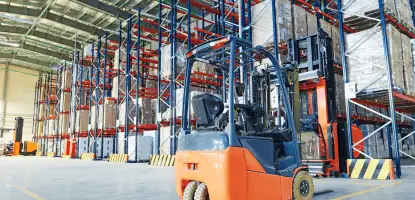
In fast-paced hubs where pallets, pickers, and mobile equipment operate round-the-clock, even minor unauthorized motion can break audit chains or disrupt fulfilment.
- Flags movement of forklifts, pallet jacks, or AMRs during lockdown or shift changeovers
- Detects inventory tampering or suspicious access in docked zones
- Integrates with ERP logs to timestamp and escalate incidents in real time
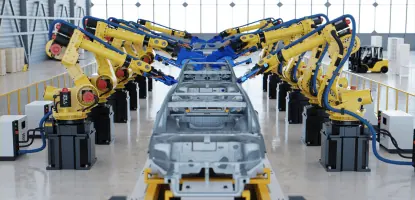
On shop floors with robotic arms, cranes, or line conveyors, movement is tightly bound to safety protocols and operator check-ins.
- Detects unscheduled activity from parked machinery or idle cranes
- Verifies against operator access and machine pressure sensors before flagging
- Auto-generates alerts for floor supervisors with zone-specific context
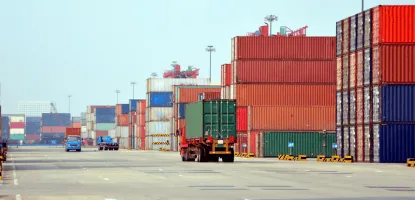
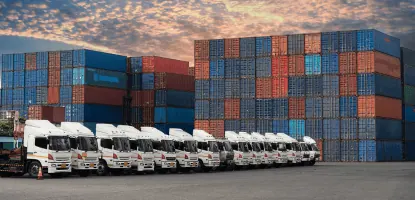
In high-volume loading bays, any deviation from movement schedules poses risk to cargo integrity and worker safety.
- Monitors trailers, container trucks, and dock cranes during off-hours
- Detects unauthorized vehicle rollouts or unscheduled repositioning
- Triggers sirens or auto-lock gates when movement breaches thresholds
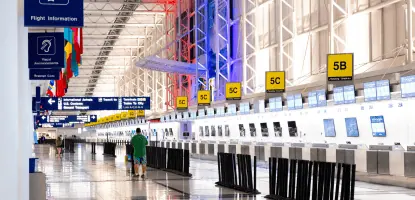
With heightened safety zones, object movement near tarmacs or service roads must be strictly controlled.
- Detects tow vehicle or baggage cart motion during restricted windows
- Confirms object movement against ground crew access logs and schedules
- Integrates with access control systems for lockdowns during anomaly events

In regulated zones, even minor movement of stored tanks, drums, or cold storage units can lead to compliance violations.
- Monitors stationary storage units for unauthorized repositioning or tampering
- Validates movement against maintenance scheduling and operator credentials
- Logs all incidents with timestamped audit trails for regulatory review
Large-scale dispatch centres require seamless orchestration—unauthorized movement can cause ripple effects downstream.
- Tracks robotic pickers and floor equipment for deviation from assigned lanes
- Flags equipment repositioning during scheduled downtime
- Delivers centralized incident reporting for faster resolution across sites
Choose iProgrammer
Our systems don’t just detect motion—they evaluate context, verify against schedules, and trigger the right response without human delay.
Seamlessly connects with ERP, access control, and maintenance systems to ensure every alert is actionable and audit-ready.
From AI vision to industrial automation, our solutions are informed by real-world operations, not lab demos.
Designed to run across multi-zone, multi-shift environments with minimal false positives and zero manual dependency.
Every deployment is calibrated to your movement thresholds, object types, and facility logic—not a one-size-fits-all engine.
Detects, verifies, and escalates in real time—so incidents are resolved before they become problems.
Outcomes
A leading logistics provider faced unexplained discrepancies in fleet fuel usage. Suspicion of late-night tampering grew, but traditional surveillance failed to provide conclusive evidence, especially for trailers stationed in remote dock zones.
Our AI-powered Moving Object Detection system was deployed across outdoor bays, synced with trailer IDs, operator logs, and ERP schedules. At 2:17 a.m., the system flagged low-grade motion from a locked trailer. With no driver authentication and no job scheduled, gates were sealed, and the control room was alerted in real time.
- Internal collusion ring uncovered within three weeks
- Estimated $285,000 in annual asset theft prevented
- Strengthened nighttime visibility across high-value parking zones
A suspended crane arm shifted slightly during scheduled floor downtime. Though no immediate damage occurred, the incident posed serious risk to equipment and personnel safety. The root cause couldn’t be identified with existing surveillance and operator logs.
The system detected abnormal movement and cross-verified in real time against ERP job schedules, RFID operator check-ins, and hydraulic sensor data. All inputs returned negative. Sirens were auto-triggered, access corridors locked down, and the incident was logged without delay.
- High-risk activity intercepted without human response lag
- Potential equipment damage and safety incident fully averted
- Enabled precise post-incident analysis via timestamped logs
Repeated low-priority alerts were triggered by the same idle sealing machine over several nights. With no visible damage and no operator presence, the movements were dismissed as false positives, risking eventual failure due to inaction.
Our AI system identified a consistent movement pattern between 2:30 a.m. and 4:00 a.m., each night. Using pressure sensor correlation and anomaly classification, it flagged irregular internal vibrations. Maintenance teams were notified to inspect the machine.
- Critical fault detected in the pressure stabilization valve
- Avoided unplanned downtime worth over $15,200
- Shifted maintenance from reactive to predictive across the zone
Computer Vision + Moving Object Detection
From Seeing Movement to Understanding It
Traditional motion sensors detect that something moved—but not what or why. In complex environments, that’s not enough. iProgrammer’s computer vision models go further—identifying the object, assessing context, and triggering the right response.
Differentiate between forklifts, cranes, trailers, robotic arms, and storage units—even in low-light or obstructed views.
Detect micro-movements that motion sensors often miss—such as a crane cable swaying or a valve twitching during idle hours.
Computer vision evaluates how objects move, not just if they moved—distinguishing between harmless nudges and operational anomalies.
Using custom-trained models, the system knows whether a robotic picker moved during a maintenance window, or a trailer shifted without ignition—triggering only the right level of alert.
By combining visual tracking with ERP data, operator presence, and machine state, we filter out irrelevant activity—so your teams get fewer false alarms and faster real incidents.
Not all motion is noise. Some of it signals risk. Detect it. Verify it. Act before it is too late.
